Why Comfort Weakens Character
Explores the Stoic view on hardship, voluntary discomfort, and why growth comes from resisting ease rather than chasing it.
FEATURED ON HOMEPAGE
Stoic Life Guide
1/21/20263 min read
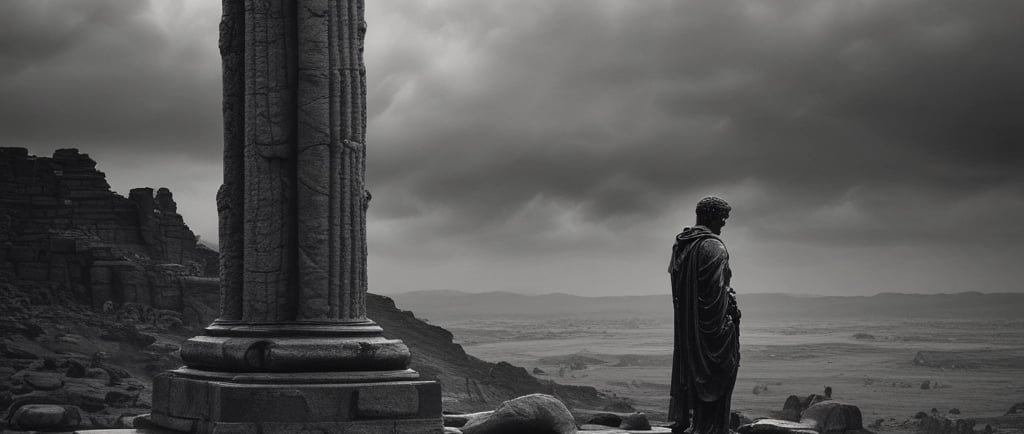
Comfort is not a moral failure. It is simply a condition. The Stoics understood this clearly, which is why they did not argue for suffering for its own sake. What they questioned—quietly but persistently—was what prolonged ease does to judgment, discipline, and character when it goes unexamined.
To the Stoic, character is not revealed in moments of convenience. It is revealed when circumstances resist us. Ease hides weaknesses; difficulty exposes them. This is not a romantic view of hardship, but a practical one. You cannot know the strength of a structure that has never borne weight.
Comfort and the Illusion of Stability
Modern life offers an unprecedented level of comfort. Temperature, food, entertainment, and convenience are available almost instantly. These conditions create a subtle illusion: that stability is the default state of life. But stability is not guaranteed—it is borrowed.
The Stoics lived with constant reminders of uncertainty: illness, exile, political upheaval, premature death. Their philosophy developed as a response to instability, not as an abstract system. From this perspective, comfort is neither good nor bad, but dangerous when mistaken for permanence.
When comfort becomes assumed rather than appreciated, it dulls attention. Judgment weakens because nothing presses against it. Decisions are made without consequence, habits without reflection. Over time, the mind grows less capable of restraint—not because restraint is impossible, but because it is no longer practiced.
Why Voluntary Discomfort Matters
Stoic philosophers encouraged voluntary discomfort not as punishment, but as training. The purpose was to remind oneself: I can endure less. I am not dependent on excess.
Marcus Aurelius wore simple clothing despite having access to luxury. Seneca practiced sleeping on the floor and eating plain food, asking himself, “Is this what I feared?” These acts were not gestures of superiority. They were exercises in realism.
Voluntary discomfort strips away false needs. It reduces fear by showing that the worst-case scenario is often tolerable. When you choose discomfort deliberately—cold exposure, physical exertion, delayed gratification—you reclaim agency over your reactions. You are no longer at the mercy of circumstances; you have rehearsed adversity in advance.
Importantly, Stoicism does not advocate constant deprivation. The goal is flexibility, not suffering. A person who needs comfort is fragile. A person who can take or leave it is resilient.
How Comfort Erodes Discipline
Discipline is not a personality trait; it is a muscle. Comfort weakens it through overuse of shortcuts.
When food is always abundant, hunger no longer teaches restraint. When distractions are constant, attention atrophies. When minor inconveniences are eliminated, tolerance for friction disappears. The result is not laziness, but dependency—on ease, speed, and stimulation.
Consider judgment. Good judgment requires friction: pausing before reacting, enduring uncertainty, sitting with discomfort long enough to think clearly. In a world optimized for immediate relief, discomfort is quickly escaped rather than examined. This makes emotional reactions louder and reasoning quieter.
The Stoics warned that when pleasure dictates behavior, reason follows rather than leads. Not because pleasure is evil, but because unchallenged pleasure crowds out deliberate choice.
A Practical Perspective
Stoicism is not about rejecting modern life or retreating into austerity. It is about preventing comfort from becoming your standard for decision-making.
Practical Stoic resistance to excess comfort looks modest:
Choosing physical effort over convenience when possible
Allowing boredom instead of immediately filling it
Practicing restraint even when indulgence is available
Accepting small discomforts without complaint
These actions are not symbolic. They reinforce a simple truth: You are capable of more than ease suggests.
Character Is Built Quietly
Hardship does not automatically build character. But untested comfort rarely does.
Character is shaped in the small, unobserved moments when you resist the easiest option—not to prove anything, but to remain capable. The Stoics valued this capacity deeply. To them, freedom was not about having more, but needing less.
In a world that smooths every edge, intentional resistance matters. Not dramatic renunciation, but selective friction. Enough to stay sharp. Enough to remember that comfort is a preference, not a requirement.
Choose it consciously—or step away from it occasionally—so that when life withdraws its conveniences, your character does not collapse with them.